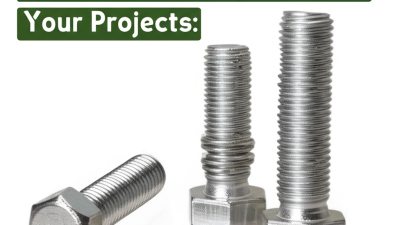
When you're builDing sturdy, reliable steel structures, picking the right steel structure bolts is a pretty big deal. It’s all about making sure everything's strong and safe. As we move further into 2025, staying up-to-date with the latest trends and standards in fasteners has never been more important. Here at Handan Youheng Fastener Manufacturing Co., Ltd., based in Yongnian District, Handan City, Hebei Province, China, we really stress the importance of choosing high-quality bolts that are specifically made for steel structures. With years of experience and a pretty sizable facility covering over 4,000 square meters, we’re dedicated to offering top-notch fastening solutions—helping engineers and builders make smarter, more informed choices. In this blog, I’ll share five key tips for selecting the best steel structure bolts, so you can navigate this ever-changing industry a little easier.
Understanding the Importance of Steel Structure Bolts in Construction Projects
Whenever you're working on building steel structures, you can’t afford to overlook the importance of choosing the right bolts. Seriously, these little things are the backbone of the wHole framework—they hold everything together and keep it stable. Without good bolts, your structure might just crumble under pressure from wind, earthquakes, or even its own weight. That’s why, as a builder or engineer, it’s super important to really understand the specs and quality of the bolts you're using.
And let’s be honest, using cheap or wrong bolts can spell disaster—think structural failures, higher repair bills, or even safety risks. Basically, the bolts you pick don’t just impact how well your building holds up over time; they also affect your project's budget and reliability. So, taking the time to find high-quality steel bolts isn’t just a good idea—it’s a crucial step in making sure your project turns out successful in the long run.
5 Essential Tips for Choosing the Best Steel Structure Bolts - Understanding the Importance of Steel Structure Bolts in Construction Projects
| Tip | Description | Material Certification | Load Capacity (kN) |
| Know the Specifications | Ensure the bolts meet the project specifications for size, grade, and finish. | ISO 9001 Certified | 50 |
| Consider Corrosion Resistance | Choose bolts with proper coatings or materials for environments prone to corrosion. | ASTM A325 | 70 |
| Check Threading Quality | Ensure threads are cut correctly for a secure fit and easy installation. | ACME Thread Certification | 40 |
| Review Mechanical Properties | Understand the tensile strength and yield strength specifications. | DIN 931 | 90 |
| Evaluate Manufacturer Reputation | Choose reliable manufacturers known for quality and performance. | Certified Quality Assurance | 60 |
Key Characteristics to Look for in Steel Structure Bolts
When you're choosing bolts for steel structures, it’s pretty important to pay attention to a few key things that make sure everything stays solid and reliable. First off, the material grade of the bolts really matters. As per the standards from ASTM, bolts made from higher grades like ASTM A325 or ASTM A490 tend to be much stronger and better suited for heavy-duty, high-stress situations.
Picking the right grade isn’t just about compliance; it really makes a big difference in how safe and sturdy your entire structure ends up being.
Another thing to think about is the coating or finish on the bolts. Since steel structures often face tough environmental conditions—think rain, humidity, or even salty air—corrosion can be a real problem. According to the folks at the National Association of Corrosion Engineers, bolts that have been hot-dip galvanized or given other corrosion-resistant coatings can actually add up to 30% more life to the structure.
And of course, making sure those bolts meet proper certifications, like those from the American Institute of Steel Construction (AISC), gives you that extra peace of mind knowing they’ll perform well under different loads and conditions. Bottom line—investing in the right bolts with the right characteristics is crucial to making sure your project turns out safe, lasting, and just plain solid overall.
Comparative Analysis of Different Types of Steel Bolts for Structural Use
When you're dealing with structural projects, picking the right kind of steel bolts really makes all the difference in keeping things safe and lasting a good long time. I’ve put together this quick comparison to help you understand the various types out there, along with what they’re best suited for and their advantages. You’ll find common options like hex bolts, lag bolts, and anchor bolts — each designed to handle specific stress levels and work best in certain environments. For example, hex bolts are often the go-to for heavy-duty, high-tension situations because they’ve got excellent load-bearing strength. On the other hand, lag bolts are awesome when you’re attaching wood to steel, giving you a solid grip even in softer materials.
Over here at Handan Youheng Fastener Manufacturing Co., Ltd., based out of Yongnian District in Handan City, Hebei Province, we’re all about making top-quality steel bolts tailored for all sorts of structural projects. Our facility spans over 4,000 square meters, and with a registered capital of 5 million yuan, we’re serious about meeting industry standards. Our passionate team is always working on creating innovative fastener solutions, so our clients can pick the most reliable and effective bolts that fit their specific construction needs. Knowing the differences between these bolt types really helps make smarter choices, leading to structures that perform better and last longer.
Real-World Applications: Success Stories Utilizing Quality Steel Bolts
When you're dealing with steel structures, choosing the right bolts really matters—it's a big deal for making sure everything stays solid and lasts a long time. I came across a study from the American Institute of Steel Construction (AISC) that pointed out that more than 30% of failures in steel buildings happen because of poor bolt choices. That just goes to show how important it is to go for quality. Take the new Kansas City International Airport, for example. They used top-notch steel bolts that meet ASTM A325 standards, and you can really see how durable and resistant they are, even under heavy load conditions.
On the other hand, when it comes to building bridges, investing in premium steel bolts clearly pays off. The Federal Highway Administration (FHWA) mentioned that bridges using high-strength bolts tend to last about 20% longer—saving a lot of money in the long run. Think about the San Francisco-Oakland Bay Bridge repairs—they used some pretty advanced bolting tech to make sure these huge structures can handle all sorts of environmental stress and stand the test of time. All these stories really drive home the point: opting for good quality steel bolts isn’t just a good idea—it’s a must in modern engineering. It’s honestly an investment that pays off huge down the line.
Common Mistakes to Avoid When Selecting Steel Structure Bolts
Whenever you're choosing bolts for a steel structure, it's surprisingly easy to slip up on some pretty common mistakes—that can really mess with the whole project. One thing I’ve seen folks overlook is thinking about what the bolt is actually going to be used for. Not all bolts are created equal, right? Different jobs need different types, grades, and coatings. If you ignore the load requirements or the environment it’s going to be in, you might end up doing rework later, or worse, risking a structural failure. Not fun.
And then there's sizing and threading—such small details, but they matter so much. Using bolts that are too long or too short can really throw off the stability. Plus, if the threads aren’t right, they can loosen over time, which could be dangerous. The key is making sure the bolts match the materials you’re working with—otherwise, everything might not hold together as securely as it should. By steering clear of these typical mistakes, you’ll be in a much better spot to make smart choices, and your structures will stand strong and safe for the long haul.
Essential Guide to Choosing the Right Hot-Dip Galvanized Carriage Bolts: Grades 4.8, 8.8, and 10.9 Explained
Selecting the right hot-dip galvanized carriage bolts is crucial for any project, especially when considering grades like 4.8, 8.8, and 10.9. For applications requiring enhanced strength and durability, grade 10.9 bolts are the ideal choice. These bolts are made from high-quality materials such as 40Cr and 35CrMo, ensuring they can withstand significant loads and harsh environments. The hot-dip galvanizing process provides an additional layer of protection against corrosion, making them suitable for various industries including mechanical manufacturing and shipbuilding.
In addition to their strength, these hot-dip galvanized carriage bolts are available in a diverse range of dimensions from M6 to M20, catering to different needs. Their compliance with the GB/T14 standard, coupled with ISO 9001 certification, underscores their reliability and quality assurance. Whether you're involved in building structures or automotive applications, choosing the right grade and specifications is critical for ensuring the longevity and safety of your projects. The versatility and robustness of grade 10.9 carriage bolts make them an exceptional choice for demanding engineering tasks across multiple sectors.
FAQS
: The right bolts are crucial for ensuring the integrity and durability of the steel framework, providing stability to withstand external forces like wind load and seismic activity.
Using substandard bolts can lead to catastrophic failures, increased maintenance costs, and potential safety hazards, negatively impacting the structural performance and reliability of the project.
Higher-grade materials, such as ASTM A325 or A490, are recommended as they offer superior strength and are designed for high-stress applications, enhancing structural integrity and safety.
Bolts with hot-dip galvanizing or corrosion-resistant coatings can significantly extend the lifespan of the structure, as they protect against corrosion and deterioration, potentially increasing durability by up to 30%.
It is important for bolts to meet specific certifications, such as those from the American Institute of Steel Construction (AISC), to ensure their performance under varying loads and environmental conditions.
Common mistakes include neglecting the specific application, overlooking load capacities and environmental factors, and improper sizing or threading of bolts, all of which can compromise structural integrity.
Using bolts that are too long or too short can destabilize the structure, while improperly threaded bolts can loosen under stress, creating serious safety hazards.
The choice of high-quality bolts influences the performance and durability of steel structures, which ultimately affects the cost-effectiveness and reliability of the construction project.